Christmas in the 1940s and 1950s wasn't necessarily simpler, quieter or less commercial than Christmas today. But in family photographs, advertisements and memories from the era, it has acquired a warmth all its own.
It was a period when many of the traditions we still recognize today were becoming firmly established in American family life. Children visited Santa at downtown department stores. Christmas cards filled the mailbox. Families decorated real trees with glass ornaments and strings of lights. Radios — and increasingly televisions — filled homes with Christmas music and holiday entertainment.
And on Christmas morning, somebody usually had a camera ready.
Christmas During the War Years
The early 1940s brought Christmas celebrations under extraordinary circumstances. World War II separated millions of families, and wartime shortages affected everyday life at home.
Families mailed cards and packages to servicemen overseas. Christmas letters carried news from home. Communities organized holiday events for military personnel stationed far from their families.
Rationing and material shortages could make certain gifts and decorations harder to obtain. Families reused ornaments, improvised decorations and made gifts at home.
Yet Christmas remained important precisely because normal family life had been disrupted. Familiar songs, decorations, meals and traditions provided a connection to home.
The Downtown Christmas Shopping Trip
Before suburban shopping malls became dominant, Christmas shopping often meant a trip downtown.
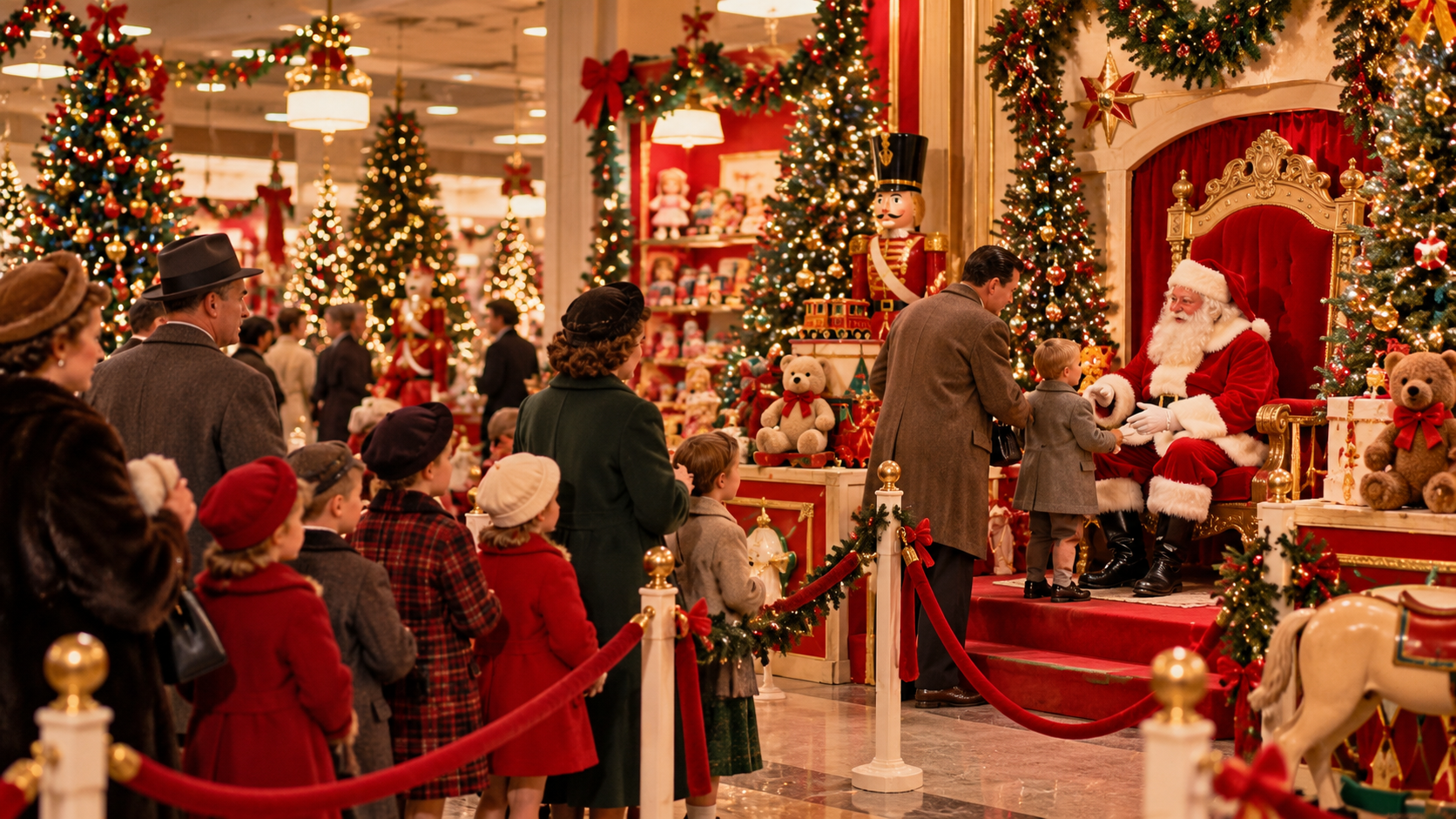
Major department stores transformed themselves for the holidays. Elaborate window displays drew crowds on the sidewalks. Toy departments became destinations for children. Buildings were decorated with garlands, lights and enormous Christmas displays.
And somewhere inside was Santa.
Visiting the department store Santa was already a well-established tradition by the 1940s and 1950s. Children waited for their turn, climbed onto Santa's lap and delivered their Christmas wish lists.
If a photographer was nearby, the family might leave with one of the most enduring souvenirs of childhood: the annual picture with Santa.
Christmas Cards Filled the Mailbox
Long-distance phone calls were expensive, and there was no email, texting or social media.
The Christmas card was one of the easiest ways to stay connected with distant friends and relatives.
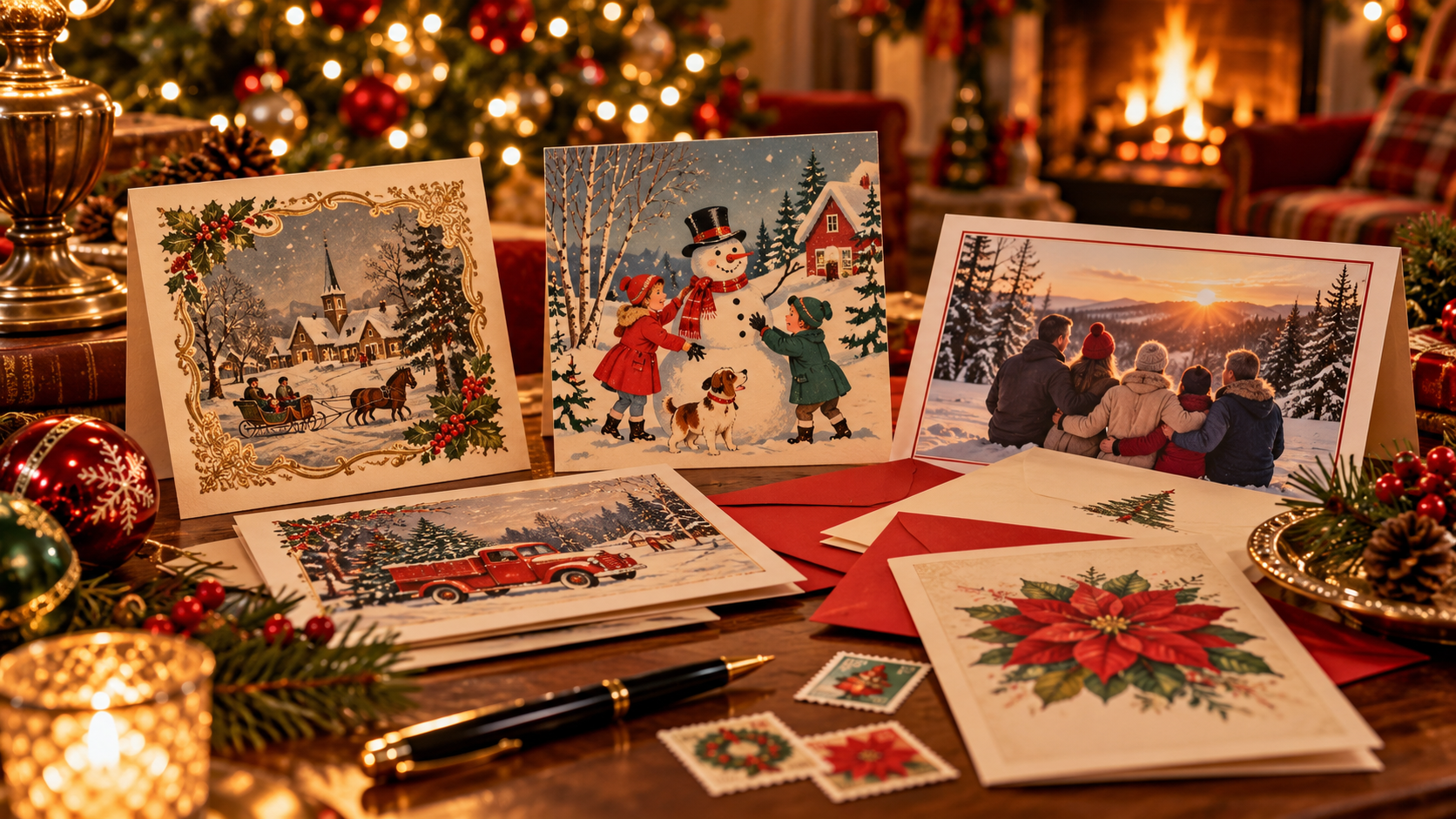
December mailboxes filled with colorful envelopes. Cards depicted snowy villages, churches, poinsettias, Christmas trees, Santa Claus and idealized family scenes.
Some families added handwritten notes. Others enclosed annual letters describing the year's important events.
Cards were displayed across mantels, tucked around mirrors or hung along doorways, gradually turning the house into a gallery of Christmas greetings.
Decorating the Family Christmas Tree
For many families, decorating the Christmas tree was one of the most anticipated events of the season.
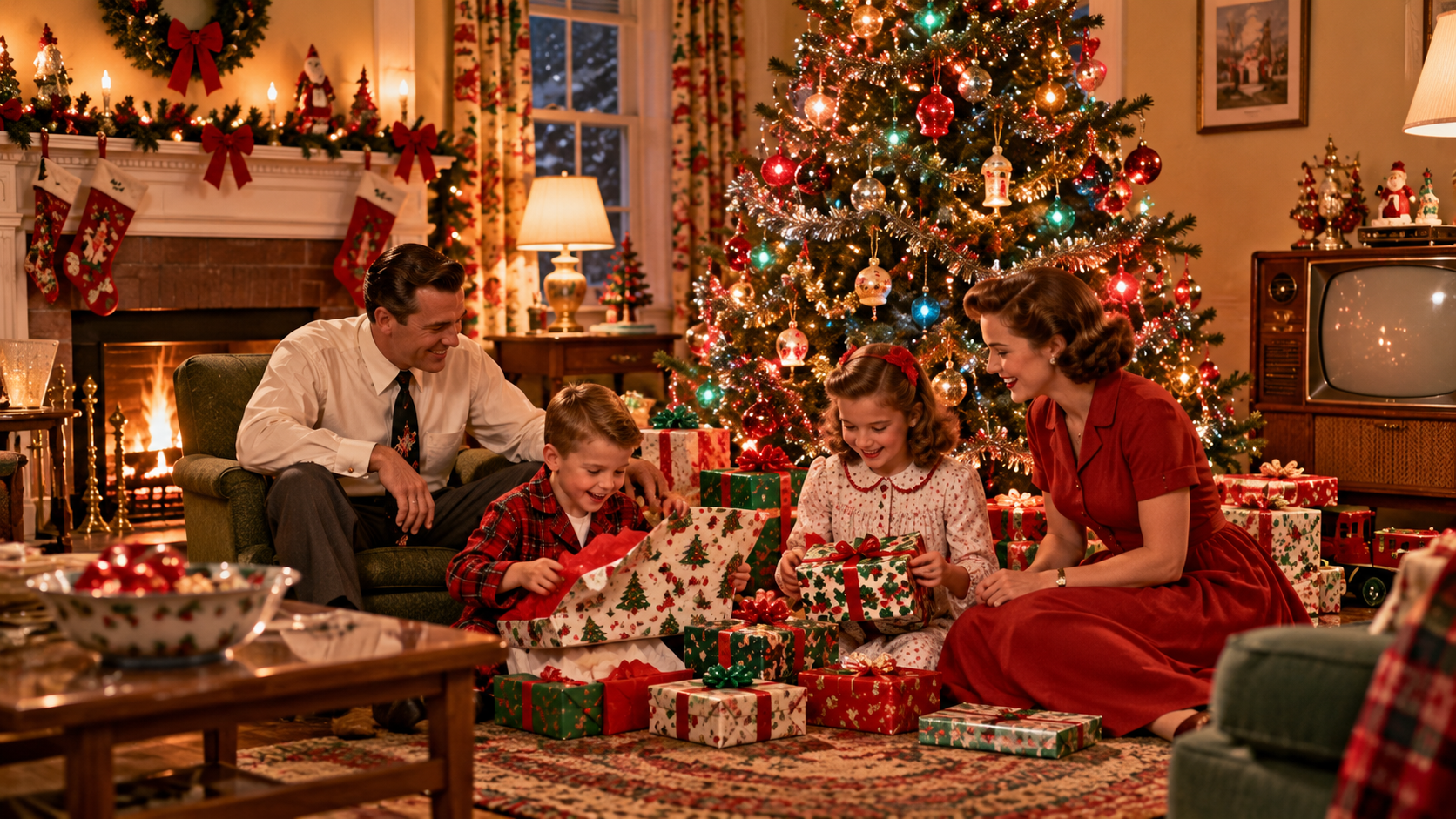
Real evergreen trees were common. Families brought them home, placed them in stands and decorated them with glass ornaments, tinsel, garlands and electric lights.
Ornament collections often grew gradually. Some decorations were purchased, while others were handmade by children and carefully saved from year to year.
The Smithsonian’s Holiday Bubble Lite Set preserves an example of this decorating fashion: eight lights with tubular glass envelopes and colored liquid. Its catalog describes “Biscuit-style” lamp skirts used between 1947 and 1960. A surviving object can help identify a decoration’s type, although it cannot date an entire family photograph.
Tinsel added another unmistakably mid-century touch, reflecting the colored lights and making the entire tree shimmer.
The Aluminum Christmas Tree Arrives
By the late 1950s, Christmas decorating took a distinctly modern turn.
Aluminum Christmas trees appeared in American homes, their shiny metallic branches offering a futuristic alternative to the traditional evergreen.
Because electric lights weren't generally placed directly on the metal branches, many aluminum trees were illuminated by a rotating color wheel positioned on the floor.
As the wheel turned, red, blue, green and gold light washed over the silver branches.
Nothing says mid-century Christmas quite like a sparkling aluminum tree glowing beneath a rotating color wheel.
Christmas Music Comes From the Radio
Many of the Christmas songs that still dominate holiday playlists were new recordings during the 1940s and 1950s.
Bing Crosby's recording of White Christmas became one of the defining songs of the era. Nat King Cole recorded The Christmas Song. Gene Autry sang about Rudolph the Red-Nosed Reindeer. Perry Como, Frank Sinatra and other popular performers recorded Christmas standards that remain familiar generations later.
Families heard the songs on radio broadcasts and records played at home.
What we now think of as "classic Christmas music" was, for many families in the 1940s and 1950s, simply the newest Christmas music.
Television Changes Christmas at Home
During the 1950s, television rapidly became part of American family life.
That meant Christmas entertainment could now arrive directly in the living room.
Variety programs featured Christmas episodes. Singers performed holiday songs. Children's programs incorporated Santa Claus and Christmas stories.
Families who once gathered around the radio increasingly gathered around the television.
In the following decade, animated Christmas specials would turn holiday television into a tradition of its own. The television habits developed during the 1950s helped prepare the way.
The Sears Christmas Catalog and the Wish List
Long before children could browse toys online, catalogs offered pages of possibilities.
The Sears Christmas catalog became famous for its enormous selection of holiday merchandise, particularly toys.
Children could study the pages, circle favorite items and assemble Christmas wish lists with impressive precision.
Dolls, electric trains, bicycles, toy cars, chemistry sets, cowboy outfits and countless other treasures competed for a place beneath the tree.
For a child waiting for Christmas, the catalog itself could provide weeks of entertainment.
Christmas Morning and the Family Camera
Christmas morning provided irresistible material for the growing number of families who owned cameras.
Children appeared in pajamas beside the tree. Toys were arranged across the floor. Wrapping paper accumulated everywhere.
Someone loaded film into the camera and tried to capture the moment.
Unlike today's phone photographs, those pictures couldn't be reviewed immediately. Families might wait days or weeks for the developed film to reveal whether everyone was looking at the camera — or whether Dad had accidentally cut off the top of the Christmas tree.
Decades later, those imperfect photographs became some of the most treasured records of family Christmases.
Christmas Dinner Meant Gathering Together
Food traditions varied enormously from family to family, but the holiday meal was often the center of Christmas Day.
Turkey, ham and roast beef were common centerpieces, accompanied by familiar side dishes, pies, cakes and Christmas cookies.
Recipes were passed between generations, clipped from newspapers and magazines or copied onto recipe cards.
For families separated by distance during the rest of the year, Christmas dinner offered a reason to gather around the same table.
Why Mid-Century Christmas Still Feels So Familiar
Look at a Christmas photograph from the 1940s or 1950s and much of the scene is instantly recognizable.
There's a decorated tree. Wrapped presents. Stockings. Christmas cards. Children waiting for Santa. Relatives gathered around a table. Someone holding a camera.
The decorations have changed. The toys have certainly changed. The cameras, televisions and shopping habits are almost unrecognizable.
But the rituals at the center of Christmas have proved remarkably durable.
Families still decorate the tree, send greetings, take pictures, exchange presents, prepare favorite foods and make time to be together.
Perhaps that's why Christmas from the 1940s and 1950s can feel nostalgic even to people who weren't there.
Beneath all the vintage decorations, it still looks a lot like Christmas.
Three Records You Can Examine Yourself
Rather than relying on a general picture of “the old days,” compare specific objects and images:
- Library of Congress — Caught Our Eyes: Window Shopping brings together historical store-window photographs. Look at the merchandise, signage, and displays instead of assuming every shop looked the same.
- Smithsonian — Holiday Bubble Lite Set gives a catalog description of the actual lamps and packaging.
- Library of Congress — Eames Christmas Card, 1946 documents a photographic greeting from one named couple, rather than an anonymous example assigned to a decade.
These records are snapshots of particular people and objects, not a survey of all American families. Christmas differed with income, region, religion, and family custom. A mid-century-inspired scene can borrow the look without claiming to reproduce everyone’s experience.
Use Vintage Details as Clues, Not Proof
When dating a family Christmas photograph, check the written date and known ages first. Decorations are secondary clues: families reused ornaments and lights for years. A newly fashionable object may suggest an earliest possible date, but an old ornament cannot establish a latest one. Record uncertainty instead of assigning a precise year from the décor alone.
Sources & Further Reading
These specific collection records and archive commentary document examples discussed above. They illustrate parts of the period rather than establish that all families celebrated alike.