For generations, sitting on Santa's lap has been one of the unmistakable rituals of the Christmas season. Children wait their turn, climb onto Santa's knee, tell him what they hope to find under the tree, and — if everything goes according to plan — smile for a photograph that may remain in the family for decades.
The tradition feels so familiar that it is easy to imagine it has always been part of Christmas. But the Santa visit we recognize today developed gradually, shaped by changing ideas about Santa Claus, the rise of department stores, and eventually the popularity of family photography.
A Visit, a Pose, and a Photograph Are Different Histories
Meeting a costumed Santa in a store, sitting beside him, and buying a souvenir photograph did not necessarily begin together. Evidence for an early store appearance does not establish the date of the first lap portrait. The sources linked here do not identify one definitive first photograph.
For the development of the retail attraction, see our department-store Santa history. This article focuses on what the photograph preserves: the people, the setting, and the yearly ritual.
What an Archived Santa Visit Can Tell Us
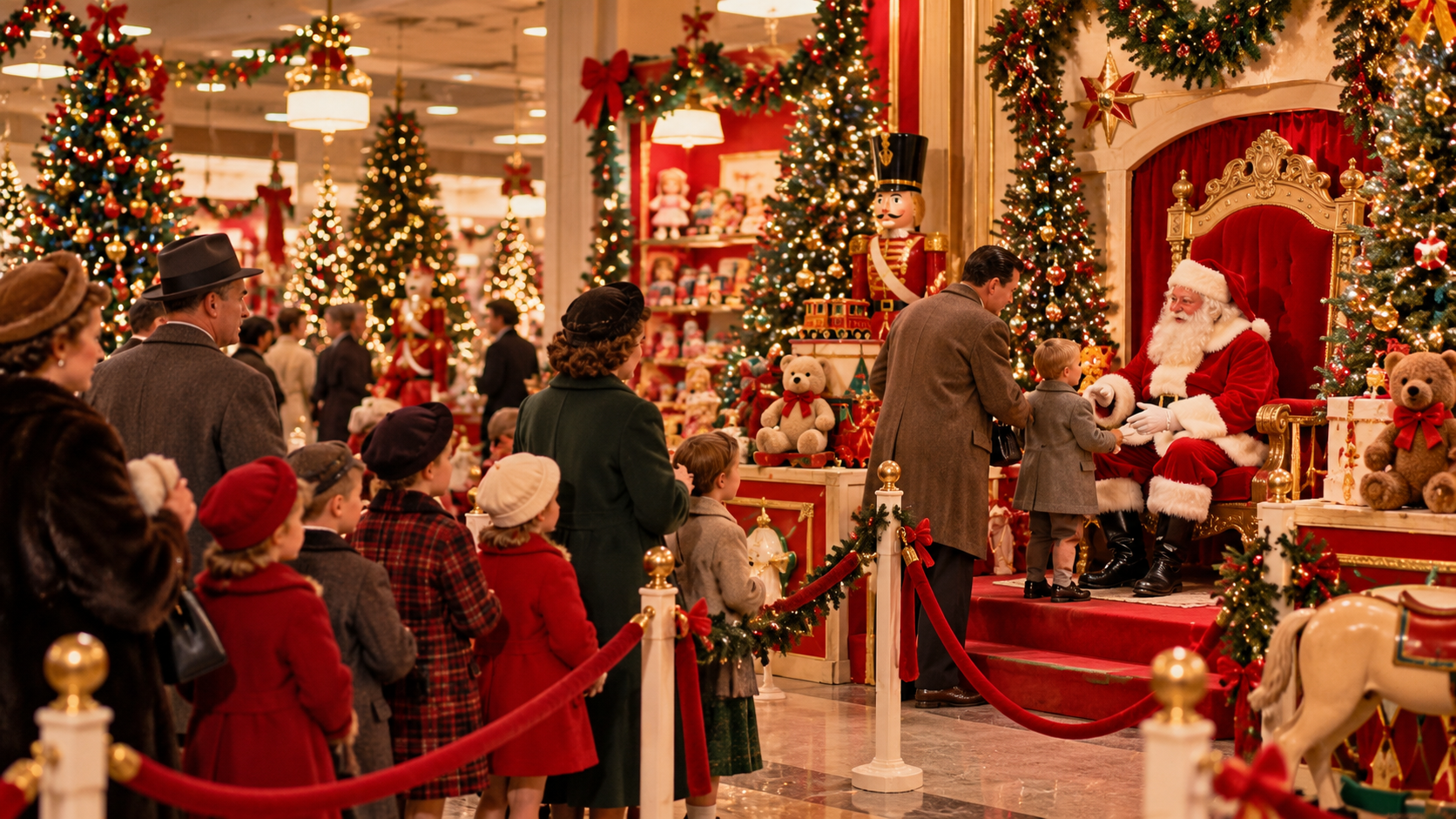
A Library of Congress photograph of children waiting to talk to Santa at Macy’s records the visit as an organized store attraction. Its catalog description notes two Santas separated from one another, and children receiving candy while sharing their wishes.
That is evidence of how a particular visit operated, rather than proof of where lap portraits began. When looking at an old Santa picture, separate what is visible from what the accompanying catalog or family record actually dates. A vintage-looking backdrop alone cannot identify a year or a store.
Why the Portrait Became a Keepsake
A conversation lasts a few minutes; a photograph can be kept with the rest of a family’s pictures. Compare portraits from different years and the changing heights, clothing, expressions, and companions become the story. The Santa chair gives the pictures a recurring setting, even when the family changes.
The Santa Photo Becomes a Family Tradition
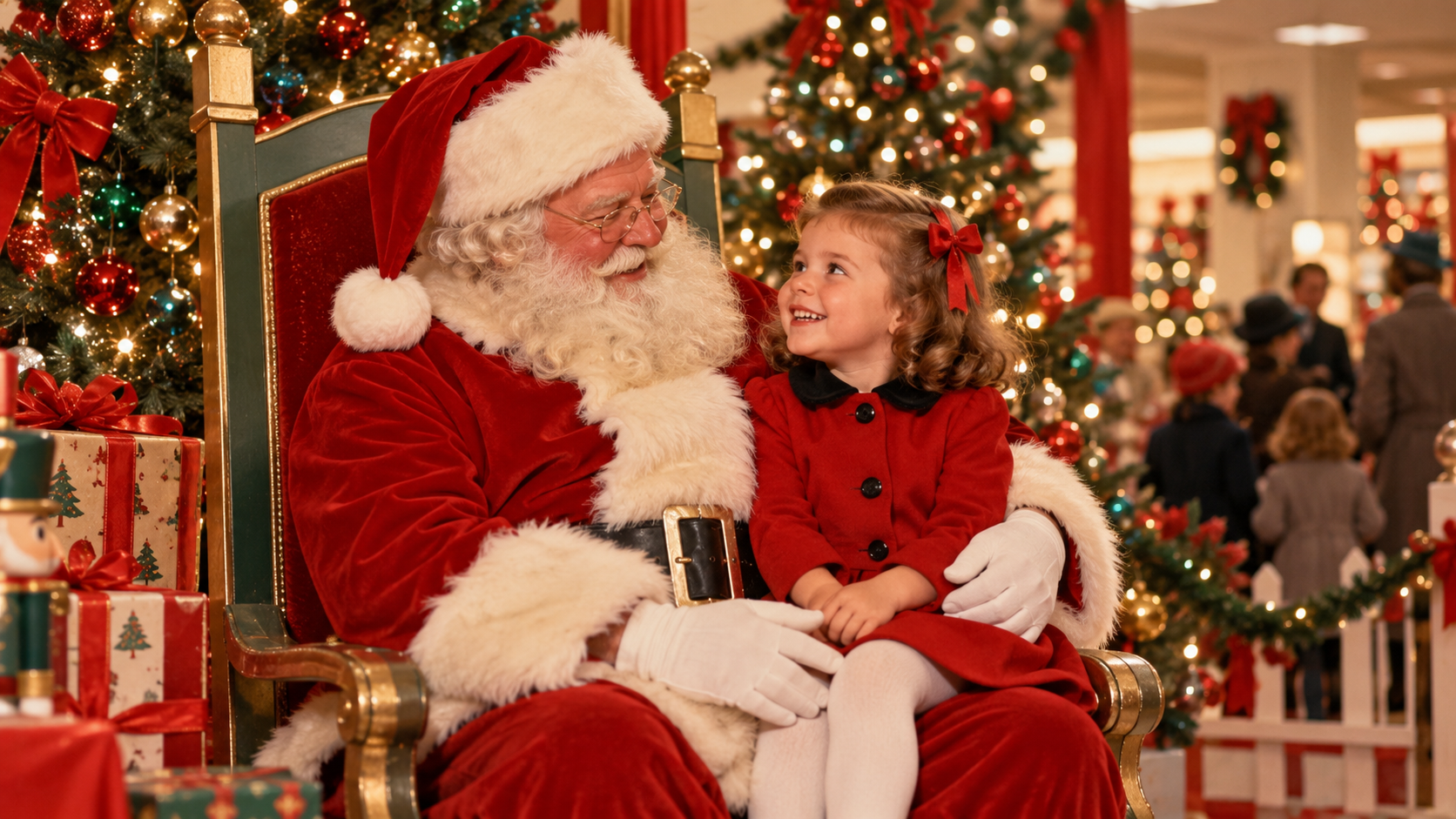
By the middle of the 20th century, the basic ingredients of the modern Santa photo were firmly established: Santa's red suit, the large chair, Christmas decorations, a child sitting beside or on Santa, and a camera waiting in front of them.
The growth of suburban shopping centers and malls after World War II gave the tradition even more places to flourish. Elaborate Santa villages and North Pole displays became seasonal attractions in their own right.
Popular culture reinforced the connection. The 1947 film Miracle on 34th Street, centered around a department-store Santa, helped cement the relationship between Santa Claus, department stores and the magic of Christmas in the American imagination.
Macy's also helped make the arrival of Santa a national spectacle. Santa has long served as the finale of the Macy's Thanksgiving Day Parade, signaling for generations of families that the Christmas season has officially begun.
The Pictures Became Part of the Fun
Of course, not every Santa photograph features a perfectly smiling child.
Some children beam at the camera. Others stare suspiciously at Santa. Some refuse to let go of a parent. And some cry the instant they are placed on the famous red suit.
Oddly enough, those imperfect photographs often become the ones families treasure most.
A Santa picture captures more than a Christmas visit. It captures a particular child at a particular moment in a family's life. Put several years of Santa photographs next to one another and they become a miniature family history.
From Department Stores to Digital Santa
The tradition continues to change.
Families still line up every December at shopping centers, community events and Christmas attractions to meet Santa in person. Cameras have changed from large professional equipment to digital cameras and smartphones, but the familiar pose remains remarkably recognizable.
Technology has also created a new version of the tradition. Families can now create imaginative Santa pictures from photographs they already have — placing children, adults, couples, friends or entire families into Christmas scenes that would once have required an elaborate department-store set.
The technology may be new, but the idea behind it really isn't.
For more than a century, families have wanted essentially the same thing: a little piece of Christmas magic they can keep.
A Christmas Tradition That Keeps Evolving
From early store Santas in the 19th century to grand department-store displays, shopping-mall Santa villages, instant photographs and today's digital creations, the setting has continually changed.
The appeal hasn't.
Sitting with Santa gives people a chance — even if only for a moment — to step into the Christmas story themselves. And the photograph lets them take that moment home.
That may be why, more than a century after children first began visiting Santa in stores, we're still taking the picture.
How to Preserve the Story Behind Your Santa Photo
Before an old photograph loses its context, record the year, location, and names of the people shown. If a date is uncertain, write “about 1955” or a range rather than turning a guess into a fact. Keep a photograph of any studio stamp, handwritten note, or store envelope with your digital copy.
Scan or photograph the original before cropping, retouching, or adding a new Santa scene. Store an untouched copy separately from the edited version. A digital Santa portrait is a new creative image, not documentary evidence of a visit that took place.
For handling original prints, follow the Library of Congress photograph-care guidance. It explains storage and handling practices that help preserve the physical keepsake.
Sources & Further Reading
The archive record documents a particular Santa visit. The retail history provides background; neither establishes the first Santa lap photograph.