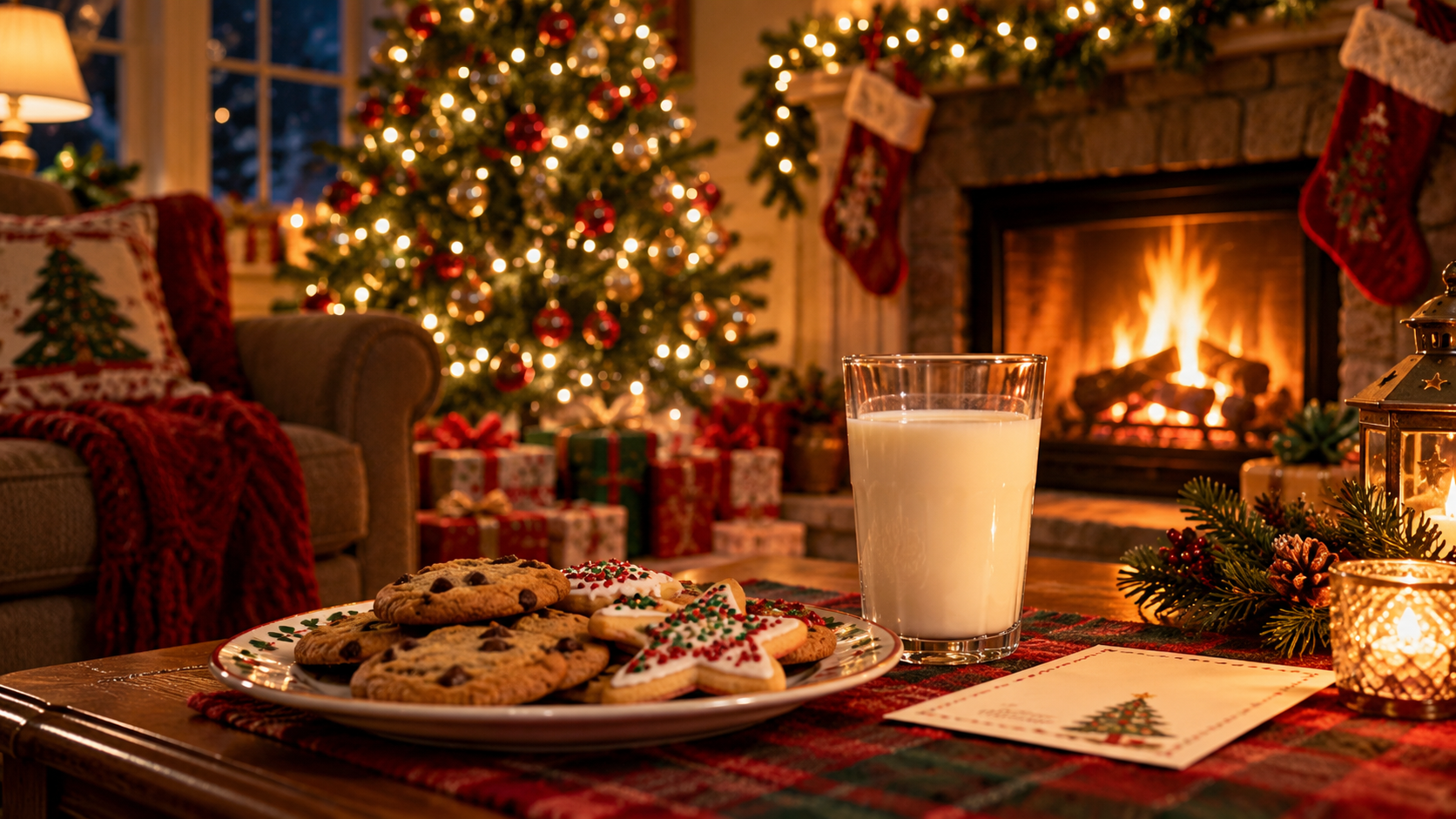
It's one of the last important jobs before going to bed on Christmas Eve: choose a few good cookies, pour a glass of milk, set everything where Santa can find it, and perhaps leave a carrot or two for the reindeer.
By Christmas morning, the milk is gone. The cookies have mysteriously disappeared — or at least have a convincing bite taken out of them — and presents have appeared beneath the tree.
For many American families, leaving a snack for Santa feels almost as old as Santa Claus himself. But the familiar cookies-and-milk tradition is considerably newer than many other Christmas customs.
Older Customs and an Uncertain Origin
HISTORY’s account by Sarah Pruitt connects Santa’s snack with older gift-bringer and animal-feeding customs, including a Norse story about Odin’s horse. That comparison should not be read as a documented, uninterrupted chain from ancient Yule to the modern American cookie plate.
Folklore changes as families retell it. Similar customs can share a theme without having one provable inventor. The safest distinction is between an older story, a later reported practice, and the tradition your own household follows.
Santa Comes Down the Chimney
By the 19th century, the American version of Santa Claus was becoming increasingly familiar.
The famous poem A Visit from St. Nicholas, first published in 1823 and better known as 'Twas the Night Before Christmas, helped popularize the image of St. Nicholas arriving by sleigh and entering homes through the chimney.
That gave families an obvious place to prepare for his arrival.
Stockings were hung by the fireplace. Christmas trees eventually filled nearby rooms. And the hearth became one of the places most closely associated with Santa's Christmas Eve visit.
A plate waiting beside the fireplace fit naturally into that story.
The Great Depression and a Reported Lesson in Gratitude
Pruitt’s HISTORY article places the custom’s American popularity in the 1930s and describes parents using it to teach generosity and gratitude. This is an attributed historical explanation, not a precise date when the first family left out cookies.
The appeal of that lesson is easy to understand: children can take part in giving rather than only waiting for presents. A modest offering makes the ritual accessible without requiring an elaborate display.
Why Choose Cookies?
For a household that already bakes at Christmas, setting aside a few cookies is a convenient way to create the ritual. A small plate is easy for children to arrange, and choosing a favorite biscuit gives them a decision of their own.
That is a practical reason to choose cookies today, rather than proof of why every earlier family adopted the custom. There is no need to insist on one “correct” recipe.
Does It Have to Be Milk?
Milk and cookies make a familiar pairing, but the tradition can fit your household. Use a drink and a treat that suit your family’s preferences. The point is the welcome, not getting a supposedly official Santa menu right.
Don't Forget the Reindeer
Santa isn't the only one working on Christmas Eve.
Many families leave carrots, apples or other treats for the reindeer. That custom echoes older European traditions in which children left food for the horse associated with a winter gift-bringer.
For children, feeding the reindeer adds another bit of evidence to the Christmas morning mystery.
A half-eaten carrot is almost as convincing as an empty cookie plate.
Different Households, Different Menus
HISTORY describes regional alternatives, including mince pies in Britain and Australia and porridge in Sweden. These are examples of reported traditions, not rules followed by every household in those countries.
If your family has its own version, write down who introduced it and what you remember. A named family memory tells a different kind of story from a general claim about a nation.
The Christmas Eve Ritual
Part of the charm of cookies and milk is that children can prepare the offering themselves.
They choose the cookies. They decide how many Santa needs. They pour the milk. Some add a handwritten note. Others carefully arrange carrots for the reindeer.
Then they go to bed knowing that something magical is supposed to happen while they're asleep.
The next morning, the evidence is waiting.
Crumbs on the plate. An empty glass. Perhaps a note from Santa.
And, of course, presents beneath the tree.
A Small Tradition With a Big Meaning
A plate of cookies and a glass of milk aren't elaborate Christmas decorations. They don't cost much, and preparing them takes only a few minutes.
Maybe that's part of why the tradition has lasted.
It gives children a role in the Christmas Eve story. Instead of simply waiting to receive something from Santa, they get to prepare something for him.
The tradition is playful, but the message underneath it is surprisingly timeless: someone is coming to give to you, so remember to give something back.
And if that lesson happens to involve a chocolate chip cookie or two, Santa probably won't complain.
Make a Small Record of Your Christmas Eve Ritual
Before bedtime, photograph the plate, the handwritten note, and the children who prepared them. Put the year and their names in the image’s description or in an accompanying note. Keep a copy of the original photograph before adding a creative Santa scene.
Repeat the photograph next year if the family enjoys it. Changes in handwriting, favorite cookies, and the way children arrange the plate can make a more personal record than a perfectly staged holiday image. If you share it publicly, choose a version that does not reveal private details from the note.
Sources & Further Reading
Historical background for this article was researched using materials from HISTORY and Smithsonian Magazine.